

A sewing pattern is the template a garment is cut from. It translates a three dimensional shape into flat pieces that can be sewn back together.
A pattern is more than an outline. It carries the contour to cut along, usually a seam allowance, notches showing which edges meet, a grainline saying how the piece lies on the fabric, and a label with the piece name and how many times to cut it. Drop any one of those and the person at the cutting table has to guess.
Patterns reach you in three ways. You buy one, printed on paper or as a file. You draft one from measurements, starting at a block. Or you take one off a garment that already fits, by measuring it or by taking it apart. All three end at the same place: flat pieces that describe a shape.
Paper is immediate and needs no software, but it creases, tears and only exists once. A file can be scaled, sent, projected and archived, but it needs a program to be read. Most workrooms end up with both, which is exactly why the step between them matters.
PatternScan Pro digitizes patterns made of paper and cut fabric pieces. Contour, notches, seam allowance and grainline end up in the file, and the paper original stays untouched in the drawer.
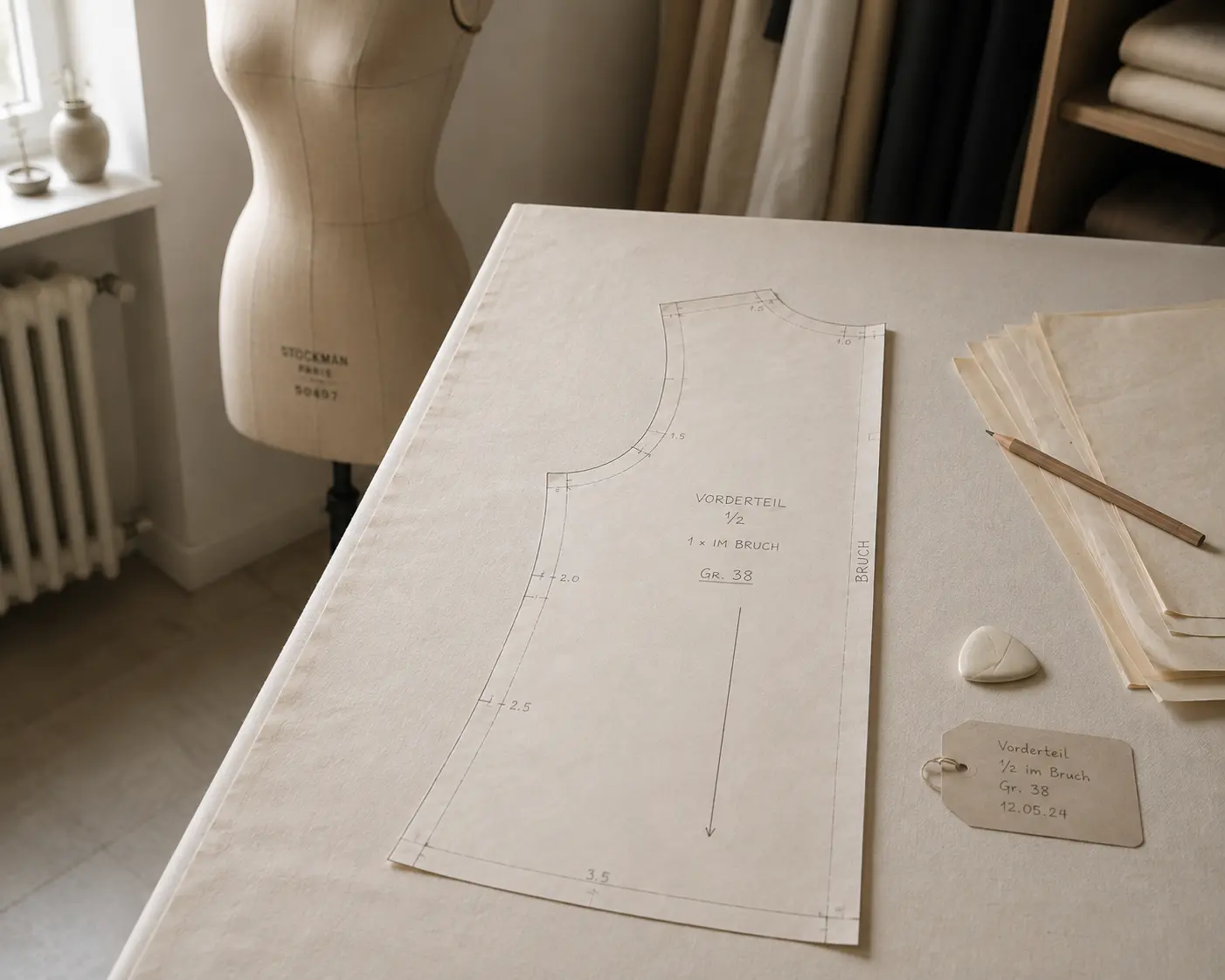
Digitize sewing patterns without tracing.
Test PatternScan Pro free for 14 days with the full feature set. You need your smartphone, a printer and one pattern you always wanted digital.
Photograph your paper pattern and get an automatically scaled digital version with PatternScan Pro.
Usage
.svg)