

A vector graphic describes shapes as mathematical curves and lines rather than as pixels. It can be enlarged to any size without going blurry.
A raster image stores a colour value for every dot on a grid. A vector file stores instructions: start here, curve to there with this bend, close the shape. Nothing is fixed to a resolution, which is why the same file prints on a postage stamp and on a five metre plot with equal sharpness.
A pattern is measurements. In a vector file every point has a real coordinate in millimetres, so the file can be measured, scaled and cut from without anything being estimated. And because lines exist as separate objects, the contour, the grainline and the notches can be addressed individually instead of being baked into one picture.
Vectors are not good at everything. A photograph, a fabric texture, a soft gradient are all things a raster image handles better. For a pattern that is no loss, because a pattern is lines, not surfaces.
Digitizing is exactly this step: a photo goes in as a raster image, a pattern comes out as vector lines with real measurements.
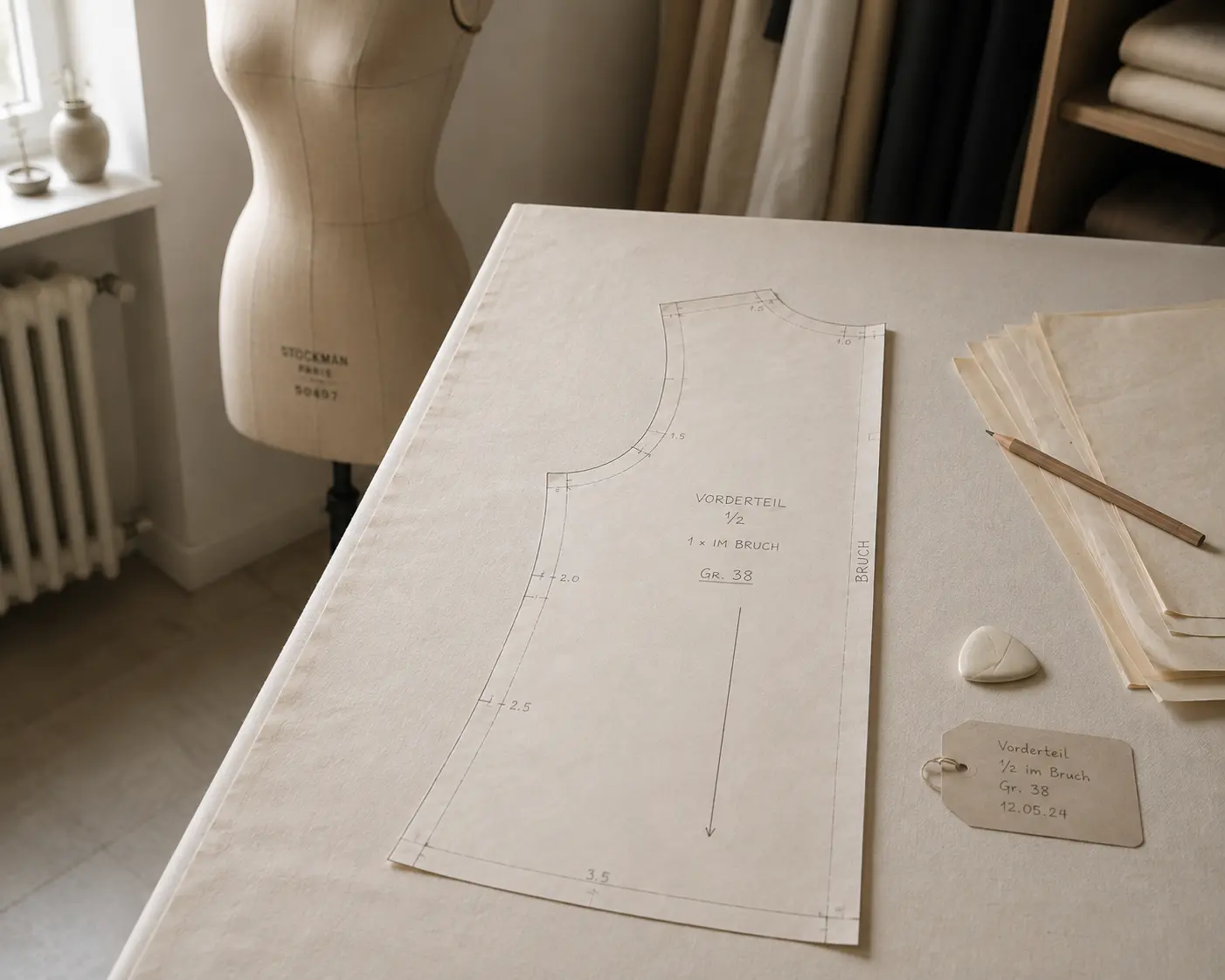
Digitize sewing patterns without tracing.
Test PatternScan Pro free for 14 days with the full feature set. You need your smartphone, a printer and one pattern you always wanted digital.
Photograph your paper pattern and get an automatically scaled digital version with PatternScan Pro.
Usage
.svg)